
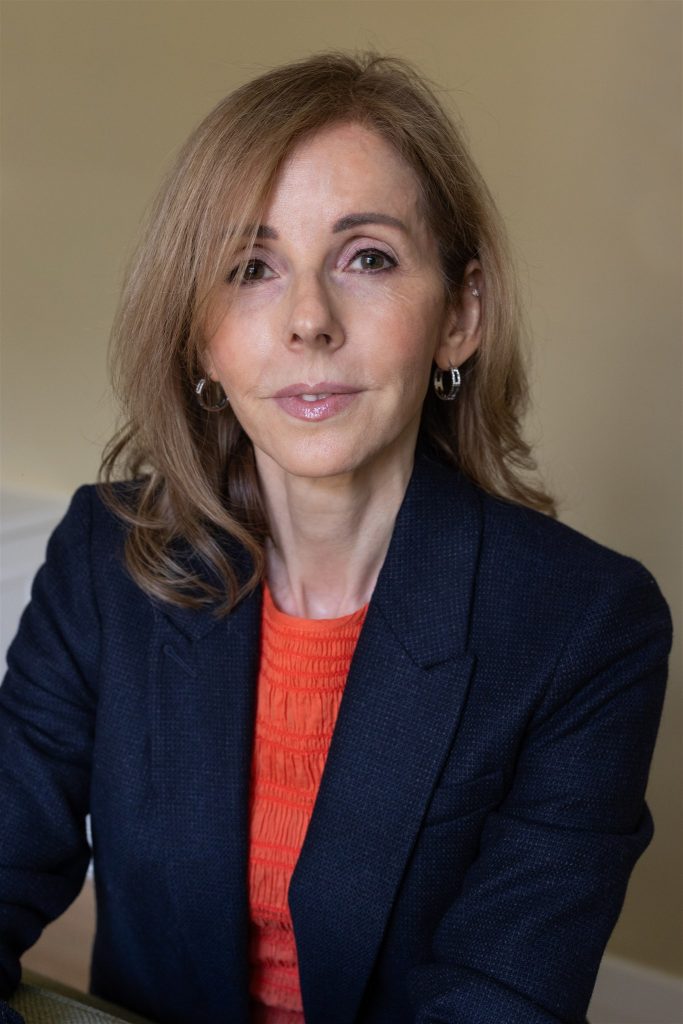
Tell me what inspired you to write
I never thought seriously about writing fiction until I reached my fifties. At the time, I was volunteering as a National Trust guide at Ham House and toyed with writing a historical novel set at this Jacobean jewel on the Thames. There’s an incredible rise-and-fall tale of a formidable Duchess who lived there in the seventeenth century. I managed to weave a key role for her into No Oil Painting. It is believed that she haunts Ham House but sadly I never once glimpsed her, not even during my ghost tours!
Then I heard a radio interview in which an art detective described how a famous stolen Titian was found, rolled up minus its frame, in a plaid nylon holdall at a bus stop outside Richmond Station in 2002. I go through there all the time, and I couldn’t shift the image of everyone rushing past, oblivious to this multimillion pound masterpiece. I remember thinking that this would make such a good ending. So, the seeds of a reverse art heist were sewn. And where better to set this than Ham House? A place which I knew and loved, brim-full of stunning art and staffed by an army of dedicated volunteers.
It also occurred to me in hindsight that – as far as I’m aware – no contemporary novel has been set at a National Trust property, which is mad considering it’s a huge British institution with over five million members.
What can you tell us about No Oil Painting?
When we meet my septuagenarian protagonist Maureen, she feels bored, lonely and like most women over the age of fifty, entirely overlooked. Later, she realises that she can turn this on its head and use her invisibility as a kind of superpower. Buried grief and trauma catch up with her, and when she hears that her favourite painting is being relocated to a Scottish castle, it’s a seemingly inconsequential incident that triggers her cunning but unhinged plan to steal or save it. A rather extreme eve-of-life crisis!
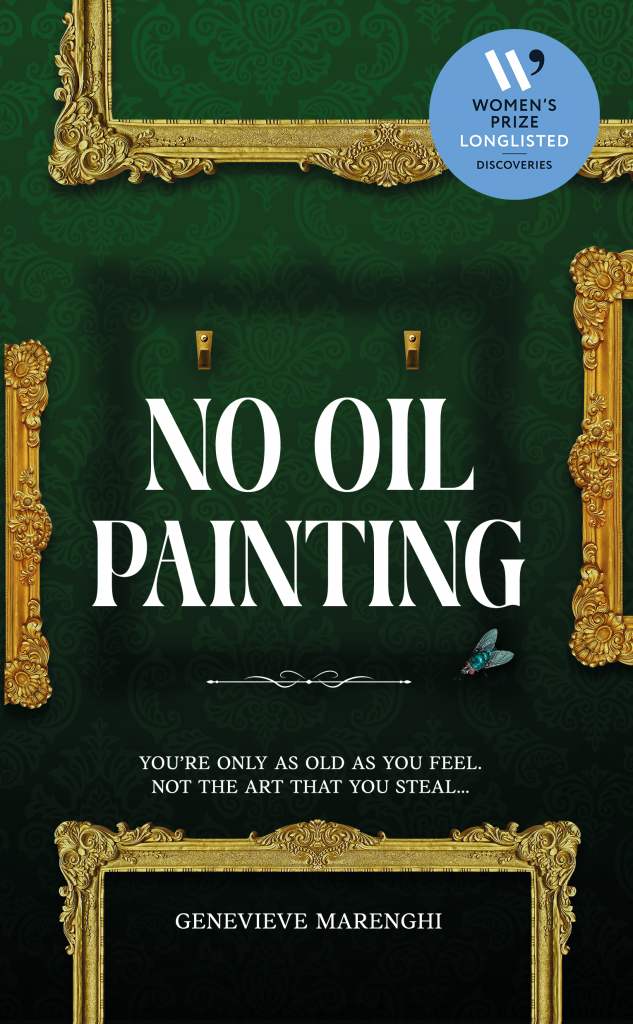
Some of her fellow guides realise what she’s done and instead of grassing her up, they decide to help. Maureen’s unlikely crew find themselves in increasingly absurd situations as they try to return the now infamous Dutch Golden Age still life without being caught.
It’s my love letter to Ham House, combined with an unhealthy fascination for art theft.
How did you celebrate when No Oil Painting was published?
I threw a launch party at Books on the Rise – a brilliant indie bookshop on Richmond Hill. (This seemed apt as Maureen lives in a small, rundown cottage in Richmond.) As well as friends and family, it was heartwarming to see some of the Women’s Prize Trust team there, along with many of my writer pals.
When can we expect your next book and what hints can you give us about it?
You’ll be amazed to hear that my current WIP is about an older woman behaving badly… This one treads darker with absurd WhatsApp group exchanges, coercive control, affairs, and poisonings behind plantation shutters in the leafy ’burbs. Watch this space.
This is your debut novel. How hard was it to get No Oil Painting published?
I was lucky enough to sign with an agent at Curtis Brown. After several edits, my agent submitted a honed manuscript to a range of editors.
I received upbeat feedback; very validating, because apparently editors don’t have to sugar-coat. But still most passed: it fell between two markets; it was too commercial; not commercial enough; cosy crime was done; they’d just signed an author in the same genre and so on. But then we received a bite from Hodder & Stoughton. Over Zoom, an editor offered some astute insights. She liked my whole concept but suggested a more commercial narrative arc. I was flattered that she’d taken the time but, truthfully, my heart sank. Nearly all her points chimed, and this meant that my manuscript wasn’t as good as it could be. I needed to turn round a major redraft asap. Her parting words, ‘Thank you for writing such brilliant characters’ spurred me on.
I overhauled No Oil Painting, but when we resubmitted, the editor at Hodder had moved on to back catalogues with another publishing house. Another hard lesson – the publishing industry is in constant flux. Furthermore, a resubmission is rare, and we received fewer responses. Other life events took over. My agent had to pause submission because she was going on maternity leave and, like many over-stretched agencies, there was no cover. Unfortunately, this also meant that, not having clinched a publishing deal, we had to part ways.
But like a gang of imaginary friends, my characters had taken up residence in my head. That’s the insanity of storytelling. And the joy. With my manuscript now in good shape, I ignored all advice to shelve No Oil Painting and submitted itto indie publishers that bypass the agent route. (Bloody-minded – moi?) Burton Mayers Books expressed immediate interest. We signed in May 2025, and it was released in October that same year. With most trad publishers, there’s usually around eighteen months between signing and the release date, so it proved some whirlwind! But this opportunity came up to release Maureen from iCloud into the world, so I grabbed it.
How many publishers turned you down?
Including the rare second submission, over thirty. To be honest, I stopped counting.
If people take one thing away from No Oil Painting to reflect on, what would you like it to be?
Sometimes your tribe is right there under your nose. Also, YOLO, but maybe don’t commit fine art theft… Mainly, I just want to whisk people away from doomscrolling and the everyday grind with an entertaining, quirky heist.
Would you consider writing for children or teens?
I have huge respect for authors of Early Reads/Middle Grade/Young Adult fiction. Storytelling is all about holding readers’ attention, but a younger audience is a tough crowd. I do have one shiny idea on the backburner.
Do you read your online reviews?
As I’m with a small indie publisher, all publicity is down to me. Although I supply seven indie bookshops myself, Amazon remains my main sales platform. (It’s very hard for authors with small indie publishers to get their books into Waterstones.) This is all to say that yes, I feel obliged to check all my reviews. Fortunately, these have largely been very positive.
What did you do before becoming a writer? Or perhaps still do?
I worked for eleven years at the Weekend FT, where I helped create and launch How To Spend It magazine. While nursing my terminally ill mother, I developed M.E. and eventually, had to resign.
Since then, I worked part time and in addition to Ham House, volunteered at the National Archives digitally transcribing sixteenth and seventeenth-century Chancery Court disputes. Each looping, slanted line whispered tales of bitter family disputes, fraud and bankruptcy. Some things never change.
Which author inspires you?
Too many to pick a single name! Edna O’Brien, Zadie Smith, Elena Ferrante, Candice Carty-Williams…
What genres do you read yourself?
I’m an omnivore, flitting between genres and nonfiction, Audible, Kindle and paper books. I usually have several books on the go at once. I belong to a writers’ book club, which has introduced me to many wonderful authors. I’d highly recommend dipping outside your comfort zone, including translated works.
What is your biggest motivator?
A tight deadline; people rolling their eyes when you say you’re writing a book; socialising with other published authors; escaping from reality.
What will always distract you?
Everyday boring admin, book promo and until recently, checking on my father who had Alzheimer’s.
How much say did you have in your book cover?
One of the advantages of working with an indie publisher is that you have much more control over your cover than with trad publishing houses. I knew exactly what I wanted for No Oil Painting and was very happy with the result. After all, people do judge a book by its cover.
As a child were you a great reader?
Absolutely. We had this giant plum tree in our garden, and in the summer, I’d climb up to a high forked branch with my tabby cat and a book. Bliss.
After school, I often had the house to myself, as both my parents worked and my older brother was usually out playing footie. So I’d settle down with a mug of scalding tea, marmalade on toast and any book that I could get my hands on. This was before my wayward Goth years.
Which bookshop is your favourite?
I’m going to choose two local ones. The Open Book in Richmond, which is mentioned in No Oil Painting. It’s like walking into this cosy, magical oasis. And Books on the Rise, also in Richmond, where I launched No Oil Painting. It has a quirky community feel, a cool vinyl section and a great little pub next door.
What can you not resist buying?
Trainers, fridge magnets and chocolate. Oh, did you mean books?
Do you have any rituals on your writing days?
Having M.E. means that I don’t have a set routine. But that’s the beauty of writing, you can rock up to your laptop anytime of the day or night in your PJs. I can’t read my own terrible handwriting, so if I’m out and about, I use my Notes app or record mumbled voice notes. Particularly when I overhear juicy exchanges, say on public transport. People say the most bonkers things and, like a magpie, I pounce on these gold nuggets.
How many books in your own to be read pile? Be truthful, we like an accurate count.
Too many to count! I have many author friends with books just released and recently I took part in a Discoveries debuts panel at Women’s Prize Live, so I’m diving into my five fellow panelists’ diverse gems.
What is your current read?
I’m finishing Ferdia Lennon’s Glorious Exploits. (Late to the party on this one.) Set in Sicily around 412 BCE, it’s brilliantly narrated in modern Dublin vernacular. It’s about the power of storytelling set against the traumatic backdrop of war. Sadly, all too relevant.
Now you were a Women’s Prize Discoveries entry… tell us everything please.
I’d completed a raw 90,000-word manuscript and leafing through the Writers’&Artists’ Yearbook, sent out a raft of truly terrible query letters. No surprises, I was ghosted by just about every suitable literary agent. Then I heard about this new Women’s Prize Discoveries programme. I tidied up my first 10,000 words and on a bleak January morning in 2021, pressed ‘Send’. I forgot all about it until an email pinged in April informing me that I’d been longlisted. Amid the Covid pandemic, this seemed extra surreal. Was I delirious or had there been some unfortunate admin error? No!
That’s the beauty of Women’s Prize Discoveries: it gives unrepresented, unpublished women writers in the UK and Ireland a unique opportunity to rise to the top of the slush pile. For free. And it was directly on the back of this that I bagged an agent at Curtis Brown. Between us, we remodelled my manuscript into something publishable.
The Discoveries programme also included a free mentoring session with another agent and this provided some invaluable insights into what can seem an enigmatic industry with its tiers of gatekeepers. I must add that the Women’s Prize Trust’s loyalty and support to all Discoveries alumni remains unwavering. They’re a warm, tight-knit team and several attended my launch party. While I lack the PR heft of the ‘big five’, they continue to champion me and provide publicity opportunities. Then there’s the special camaraderie of the stellar Disco community; we call ourselves Disco Queens.
Also, tell us about June 2026 when you told the audience at Women’s Prize Live about No Oil Painting. How was that? What did the audience say? How did they react? Sell many copies after that?
That was a very special day – me reading an extract to a packed marquee and then being interviewed by the iconic Kate Mosse, bestselling author and Founder Director of Women’s Prize. An amazing experience, particularly alongside five fellow Disco Queens
It was a lovely, warm audience and they laughed in all the right places, with many coming up to me afterwards to say how much they’d enjoyed hearing me speak. Waterstones Gower Street had a pop-up shop at the event, and they sold out of No Oil Painting and are now stocking it in their branch! Certainly, I noticed a hike in my overall sales figures afterwards.
It was also surreal bumping into some of my heroes in the Green Room, like Lyse Doucet, Jo Brand and Abi Daré. Women’s Prize Live is a joyous event and I’d recommend it to all booklovers.
A review can be found here.
https://genevievemarenghi.com/
Instagram @genevievemarenghi